Commit to Not Harming or Abusing Others
From An Abolitionist’s Handbook: 12 Steps to Changing Yourself and the World
by Patrisse Cullors
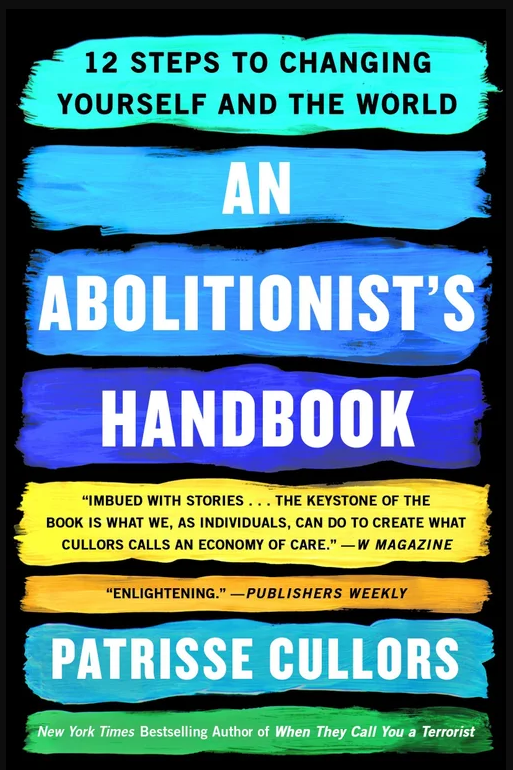
“Violence doesn’t happen in a vacuum. It is connected to the conditions that we live in, and we all participate in creating those conditions, and we all have a collective responsibility for ending violence, harm and abuse.” (p. 151)
“We all have the capacity to be harmed and also have the capacity to cause harm. The sooner we are able to understand that the dichotomy of abuser and victim is inherently false, the closer we are to understanding how abolition can, will and does support moving all of us toward a healing path…Sometimes abuse and harm are done unintentionally, but whether we cause harm intentionally or unintentionally, it is our work to interrupt that pattern for the sake of healing and liberation.” (pp. 151-152)
“Sometimes abuse and harm are done unintentionally, but whether we cause harm intentionally or unintentionally, it is our work to interrupt that pattern for the sake of healing and liberation.” (pp. 152-153)
“We were harmed. We must decide to passively forgive, actively forgive or do neither. We must remember where the abuse came from. We must commit to not harming and abusing others. If necessary and possible, we have to let go of what harm and abuse influenced us in order to make sure we don’t do it again.” (p. 157)
“Harm reduction that is grounded in healing is more than just a theory or a practice, it is a life-affirming tradition that we have learned from our resilient ancestors who have survived brutal oppression and genocide.” (pp. 175-176)
Harm vs Abuse
From Love in a F*cked-Up World: How to Build Relationships, Hook Up, and Raise Hell Together
by Dean Spade
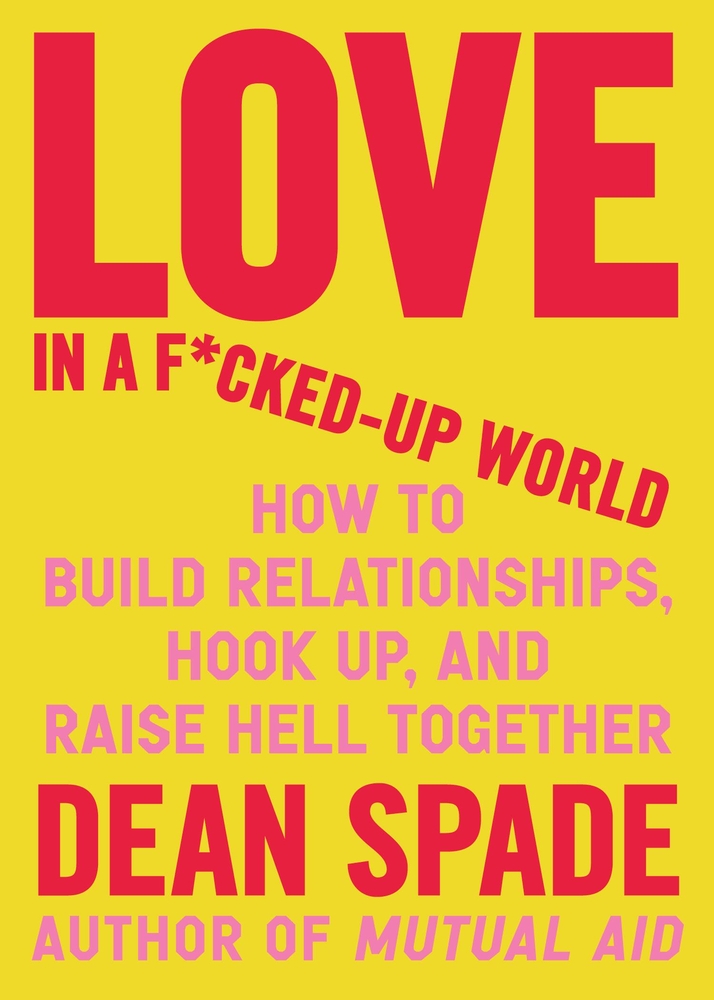
“Why is it that we find the courage to boldly confront mainstream societal norms and structures, yet are so often unable to treat romantic partners with care and generosity? Why do we lose our principles when we become insecure, disappointed, or jealous? Why do we act our worst in sexual and romantic relationships? And why do we prioritize romantic connection above other types of relationships, like friendship?
“I have seen again and again how difficult it is for us to align our values with our actions in relationships. I’ve witnessed first-hand the way our behavior with romantic and sexual partners can explode groups, sabotage projects, and thwart our work. I have deeply questioned my own behavior, used countless tools to make changes, and helped those I mentor and collaborate with to transform these harmful patterns in themselves.” (p. 3)
Distinguishing Conflict and Abuse
“There is no single perfect definition of the difference between conflict and abuse, but wise people from the antiviolence movement have long asserted that abusive relationships include one person trying to maintain control over someone else in a repeated pattern, and refusing to take responsibility for the harm they cause. We all feel urges to control others sometimes, and we all cause hurt and harm to others at times. But abuse occurs during a more sustained pattern of uneven power, control, and mistreatment. When a person is enacting or experiencing abuse, the situation calls for firmer boundaries and more support than one might need in dealing with nonabusive conflict.
“Distinguishing conflict from abuse is difficult, and the stakes are high. As Weyam Ghadbian, a facilitator specializing in conflict mediation, says, “People try to minimize abuse by characterizing it as conflict and overblow conflict by characterizing it as abuse.” Jovida Ross, another conflict facilitation expert, observes that “approaching abuse as conflict is a setup for more abuse, and mischaracterizing conflict as abuse can itself be a move to exert control.” This book cannot resolve this challenge, but hopefully it will provide tools to help us better understand our own experiences and impacts on others and build relationships based on consent. If you are trying to figure out whether your relationship is abusive, it is essential to reach out for support: you can talk to friends, work with a therapist, or call a hotline. Some resources include: The Network/La Red, (800) 832-1901; A Call for Change, (877) 898-3411; the Northwest Network, (206) 568-7777; and API Chaya, (877) 922-4292.” (pp. 29-30)
Specifically Non-monogamy
From Radical Relating: A Queer and Polyamory-Informed Guide to Love Beyond the Myth of Monogamy
by Mel Cassidy
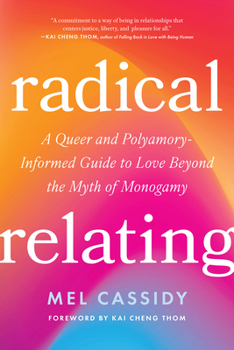
“Three common behaviours that you might experience in non-monogamous relationships that come from internalized white supremacy culture are: Avoidance of conflict: Agreeability is equated to safety. Resource and power hoarding, including love, money, time: This can show up as hierarchy, or its cousin, sneakyarchy. Expectations of conformity or ostracizing nonconformity: a rhetoric that there is ‘one true way to poly.’” (p. 26)
“As a result of equating agreeability and niceness to comfort, and comfort to safety, anyone who does bring up conflict or differences or even draws attention to harm or abuse can be accused of being harmful or disruptive.” (p. 27)